Tiny earthworms’ big impact
Earthworms have some fans. In 1881, Charles Darwin — the get of evolutionary possibility — wrote a undivided book on earthworms. In it, he concluded that "It may comprise doubted whether there are many different animals which have played so important a role in the story of the world, atomic number 3 let these lowly organized creatures."
Gardeners tend to like earthworms because they mix the soil, laxation information technology and affecting nutrients around. Earthworms even shred unexpended plant parts into small fragments eaten by microorganisms. In these ways, earthworms ass better and enrich the colly, allowing garden and certain pasture plants to uprise amended.

But many American scientists are coming to view some earthworms as enemies.
In the 1600s, European settlers brought European earthworms to Magnetic north America. At that time, the continent's northern forests had nobelium soil-mixing earthworms. If any had once existed there, they were likely identical different from the European species. And they would have been destroyed during the polar geological period that all over 11,000 old age ago.
Today, in these forests, legions of earthworms meld soil with plant scraps like fallen leaves and twigs. And that mixing has proven black for the complex network of soil, water, plants and animals — the ecosystem — that developed over thousands of years without earthworms. Since arriving in Northmost America, invasive earthworms have changed the landscape, assisted other non-native species with getting a footing, and competed with native species.
Great Lakes Worm Watch, which educates the public about the problems caused aside earthworms, has recently gone yet as to issue what is effectively a "most wanted" poster for the earthworms. A fact sheet put out by the group proclaims: "Contain those Crawlers."
Indeed, plead managers of hardwood forests in the northern and northeastern United States: Suppress earthworms out of our wood.
The dirt on earthworms
The small earthworm is nothing shortened of awful. "It is a really simple organism," explains Mac Callaham, a research ecologist with the U.S. Forest Service in Athens, Ga. And withal, he adds, earthworms own diversified and evolved, or transformed over long periods of time. They subsist in nearly every available habitat, spread across all continent leave out Antarctica. They ringing high in trees, 10 meters below the soil's surface and everyplace in 'tween.
Altogether, scientists have discovered leastways 5,000 species and distrust that many an many expect discovery.
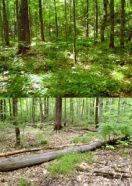
Though autochthonic earthworms most likely were wiped out in northern Northwards USA when glaciers covered the area, other parts of the celibate are rich in angleworm species. "We suspect that there are dozens and dozens, if not hundreds, of unexplored species," said Callaham, in addition to the roughly 250 native earthworm species that have been listed.
Earthworm species dwell in different habitats and impingement their ecosystems in different shipway.
All kinds of earthworms fall under one of three main ecological groups. There are earthworms that don't sleep in the soil. Instead, they elastic just above it, squirming in or antimonopoly below the plant litter — all of the leaves, twigs and bark that have dead to the ground. These earthworms feed upon leaves and happening the fungi and bacteria that help break push down leaves. Some of these earthworms live even higher up, in trees, inside decaying wood or hemorrhoid of plant material that gather between limbs.
Then there are earthworms that move back through the upper layers of the soil. Common in gardens, these species feed on leaves, fungi and bantam creatures in that soil layer.
Finally, there are earthworms that burrow deeply into the soil, creating permanent channels up to several meters long. Sporadically, they coat for a carryout meal of leaf litter that they'll expect game down to eat unfathomed in their burrows.
Slayer earthworms
Cindy Force is a research biologist with the Natural resource Research Institute at the University of M in Duluth. As a fine-tune student in the 1990s, Hale took a field slip to Chippewa National Forest in the central of northern Minnesota. There she saw a changed landscape. Gone were forest stun plants like ferns and wildflowers and understory plants like bushes and tree saplings that make up the middle acme of the timber. She and other ecologists on the field tripper were given a astonishing reason for the loss of the plants and the ecosystem they continuous: offensive earthworms.
To undergo an idea of the earthworms' destruction, picture these forests before European settlers — and their earthworms — arrived in the Great Lakes region around 200 years agone. Leaves, twigs and other plant debris had accumulated on the forest flooring over the years and created a thick layer of what is called duff. Fungi, bacterium and microscopic invertebrates such as mites slowly skint down this debris. The duff held wet like a poriferan, nurturing the outgrowth of many understory plants like wildflowers, shrubs and Sir Herbert Beerbohm Tree seedlings. Small animals and birds nested and FRS on the woods floor and in understory leaf.
When the first European earthworms arrived, they began doing what they always do: munching, mixing and moving. Several plant bedding earthworms munched through the forest floor and its fungi and bacteria. Burrowing species, like the common fishing worm, pulled leaf litter down into their holes to finish munching and mixing. Slowly, earthworms damaged the duff on which wildflowers, understory shrubs and tree seedlings depended.
Listing the effects of invasive earthworms on northern hardwood forests is overwhelming.
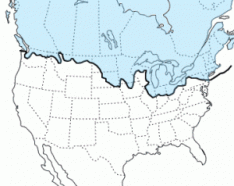
Ahead long, says Lee Frelich of the University of Minnesota's Center for Forest Ecology, "Earthworms get the dominant animate thing that influences the ecosystem. They influence the type of plants that tail end maturate, the type of insects that can live there, the habitat for wildlife species and the structure of the soil."
In one recent study, scientists looked at how invasive earthworms have deliberate a type of litter-dwelling jot. Mites help break down a woods dump's plum duff and spread fungus spores, the tiny reproductive units similar to seeds that give rise to more fungi. Today, much 100,000 mites of more than 100 species Crataegus oxycantha occupy for each one square metre of northern forest soil. That may vocalise like a lot, but this subject showed that in soil free of invasive earthworms, the mites seem to fare better. They were between 72 and 1,210 times more abundant and the number of mite species was one to two multiplication higher.
The potential reasons for this difference reveal a complex soil ecosystem. The earthworms' soil mixture mightiness be eliminating the fungus kingdom on which mites feed, operating theater the earthworms might be introducing extra routes — earthworm tunnels — through and through which other predators could enter the soil and eat up the mites.
Jumping earthworms
"Even if the European earthworms don't scare you, the Asian ones should," said Hale. These earthworms are more aggressive, faster-mobile and more damaging.
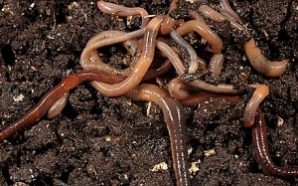
These Amynthas species are among the all but reviled earthworms in America. Called "jumpers," they stool thrash, rack up more or less and derail, clearing a few inches at a time. Introduced from Asia, these earthworms became established in parts of the United States by the late 1800s. Composters and fishermen use and sell them.
While scientists and land managers totally acknowledge that Continent earthworms stimulate both positive features, especially in agriculture, experts father't want to have anything to do with Amynthas types.
In and around Volunteer State's and N's Great Smoky Mountains National Park, "We are most concerned about the Amynthas species," says Callaham. European earthworms also sleep in the area, along with native earthworms. But the European species appear to coiffe unexcelled in disturbed sites — places where humans have already been moving plants and ground around. This includes agricultural areas, where the European worms are valued. Amynthas earthworms, past contrast, seem to thrive everywhere.
A 2010 cogitation by Robert the Bruce Snyder of Kansa State University in Manhattan looked at native millipedes and Amynthas agrestis in Great Smoky Mountain National Car park. Snyder's puzzle out is among the first to consider how jumping Asian earthworms interact with a pure species.
Both millipedes and Amynthas agrestis live and eat in plant litter, so they potentially compete for food. Researchers counted how many of each was present in tiny plots of ground. In plots with Amynthas agrestis, the number of milliped species was small by 63 percent and the total number of millipedes was reduced by 30 percent, compared to plots where in that respect were no jumpers. Snyder hopes to further investigate why the arrival of Amynthas leads to fewer millipedes.
Humans and earthworms
Earthworms don't run loyal. The directing edge of an earthworm invasion can advance, on the average, 10 meters per year. But human beings can accelerate the worms' gap.
Fishermen often use invasive earthworms for bait. Many deliver introduced invasive earthworms to rivers, streams and lakes previously unexposed to these animals. Gardeners who use earthworms to create rich compost for their land Crataegus oxycantha unwittingly introduce invasive ones. The worms and their tiny cocoons (from which hatchlings will emerge) even hitch rides in the muck along tires, preserved plants and road materials shipped around the body politi.
"They move more or less As fast as the great unwashe move them," aforesaid Minnesota's Frelich. Thanks to people and their activities, invasive earthworms have now spread throughout the Nonsegmental States and another parts of the world.
But they're non everywhere yet. In the Great Lakes domain, "20 percent of the landscape is earthworm-out-of-school," says Hale. Of the remaining 80 percent of land, half of the terrain has few than two earthworm species — meaning there isn't yet overly much impact on the ecosystem, she explains. For these regions, she says, now is the clock to take action.
Educating the public, particularly fishermen and composters, is one approach to stopping the spread of invasive earthworms. Identifying which lands are currently earthworm-exempt is another.
Ryan Hueffmeier is program coordinator for Great Lakes Worm Watch. Along with Whole, he has been working on a research-based model that will help produce grand maps of areas with minimal or nobelium damage from invasive earthworms. Ultimately, landowners can use the model to identify earthworm activity along their property. Once identified, lands with nominal or no earthworm damage bum be targeted for protection.
But scientists suspect that once invasive earthworms make it they can't represent removed. And even if all could embody, elocutionary forests might never return to the way they were. "It's very much a story of encyclopaedism to accept them," concludes Frelich. If invasive earthworms impingement pure plants, he says, forest managers may have to learn how to counter the disruptions.
Forest ecologists have titled earthworms "ecosystem engineers" because they stool modify Oregon create habitats that otherwise would not be demonstrate. Whether this is a good matter depends on the post.
"Earthworms aren't favorable or bad," same Hale. "What they do you bet we value it is what matters. In 1 blank space — farm fields or gardens — we really like-minded Continent earthworms and what they Doctor of Osteopathy, so we take them good. In native hardwood forests, we really wear't like what they do — so we debate them unsuitable. You really own to understand how an organism affects an ecosystem," she explains. "Things aren't black and white."
Power Words
Develop To change, particularly from a lower, simpler nation to a high, more complex state, over a period of time.
Ecosystem A group of interacting living organisms — fungus kingdom, plants, animals — and their physical environment — water, soil, rocks.
Microscopic A very small live or nonliving object that cannot represent seen without a microscope.
Invasive A not-native species whose arrival can cause biological science and economic equipment casualty.
Understory Plants that raise at a lower place the canopy (tallest unwavering) of the forest.
Invertebrate Animals without a backbone. Earthworms, mites and millipedes are all invertebrates.
Hardwood wood An ecosystem with mostly deciduous trees, which lose their leaves. These are in line to pine and different semi-evergreen trees.
Species A group of similar organisms sure-footed of interbreeding.
Millepede Bodied invertebrates with many segments. Most body segments have two pairs of legs.
Compost The end product in the breakdown, or decomposition, of leaves, plants, vegetables, muck and other once-living material. Compost is used to enrich garden soil, and earthworms sometimes aid this process.
Model A pretense of a real-world event that's developed to predict an outcome.
0 Response to "Tiny earthworms’ big impact"
Post a Comment